
A recent CBRE Workforce sentiment survey found that 84% of respondents wanted to continue to work from home 2–3 days a week. That's a staggering increase meaning that remote working is here to stay.
Hybrid meetings are tomorrow's reality, but are you up to the task?
Participants who are physically together, enjoy the benefits of face to face communication. For example, the added context builds meaning and understanding which leads to deeper ideas and insights. However, the participants who are in a shared space often unintentionally forget about remote participants leaving them disengaged.
On the other hand, the benefit of attending remotely is that remote participants enjoy the benefits of technology. They can rapidly source information from the internet or other digital assets. This boosts their ability to bring new exciting information to the table, increasing the effectiveness of the workshop and the outcomes generated. However, if remote participants are not appropriately engaged in a hybrid workshop, you miss the opportunity to capitalise on the opportunity to bring unexpected information into the event.
In-person and remote participation both have their pros and cons. The goal is to maximise the ability for both groups to interact as first-class citizens, no matter what the mix is.
High Engagement modes that work
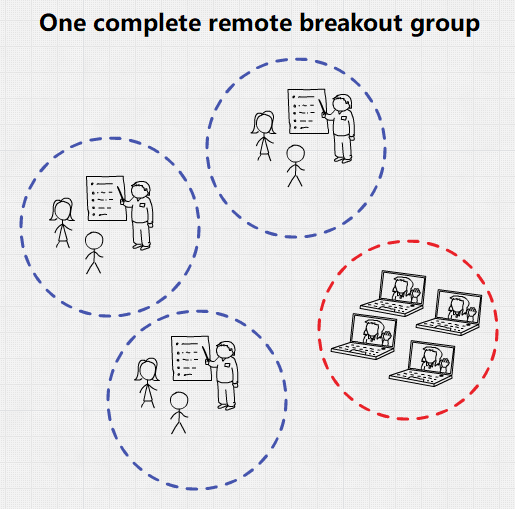
One complete remote breakout group
The easiest to manage and you can run your workshop as normal. However, when you wish to form breakout groups, have all remote participants remain on the call and have a breakout discussion online. Mute the microphone and speaker in the physical room and run your breakouts as normal for those people in the room.
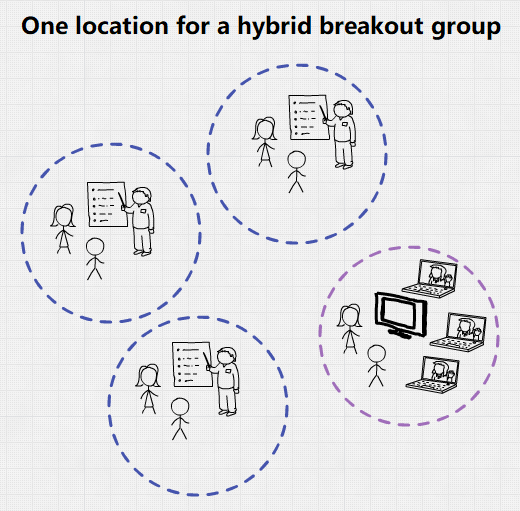
One location for a hybrid breakout group
When you only have a small number of remote participants, this hybrid setup enables them to continue to interact as part of the larger group and contribute effectively. It's important to keep this group fairly small to prevent the in-person participants from dominating the conversations.
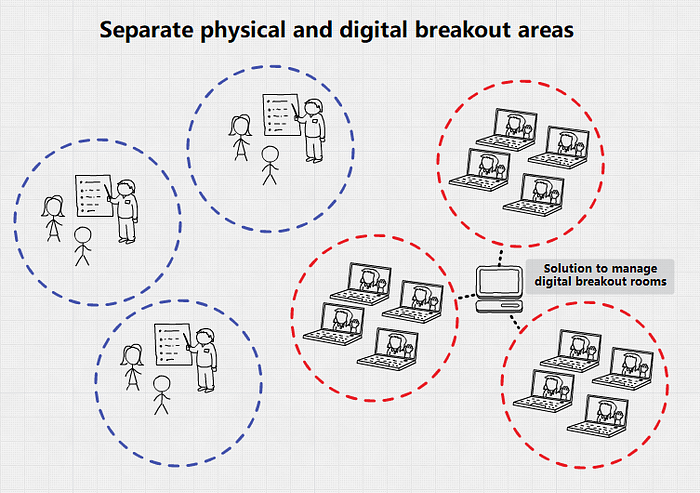
Separate physical and digital breakout areas
This setup takes a moderate amount of setup and management as you require a solution to manage the digital breakouts, but it ensures that both in-person participants and remote participants get the most out of their conversations. Having completely separate breakout areas for in-person and digital attendees makes sure that all participants are on a equal footing. However, although it guarantees a high level of engagement for each group this mode does limit the interaction between in-person and remote participants.
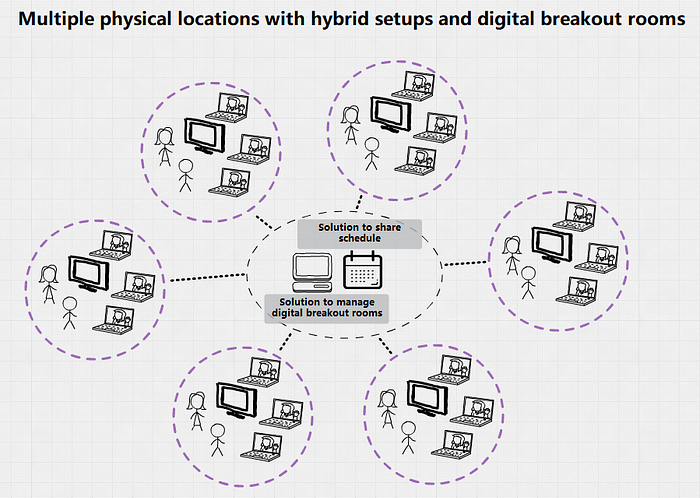
Multiple physical locations with hybrid setups and digital breakout rooms
This setup is the most difficult to run but is the best in generating engagement and collaboration between a large number of in-person and remote participants. The main challenge with this setup is the need to maintain a shared agenda for the topics that will be run in the various physical and remote environments. This agenda needs to be easily accessible by all participants in order to enable an effective flow of participants.
Wrap up
I have personally used all these modes in different hybrid events with good success. The main challenge is picking the mode that fits your needs the best.
As a final tip, one of the greatest opportunities for hybrid events is the potential to create digital assets that can then be taken away and re-used in future events allowing the participant to not only co-create outcomes in a single event but to be able to continue to build upon work in multiple events over a large duration of time. Using a digital whiteboard can be highly beneficial in making this a possibility and will help you avoid having to taking pictures of all the post-it notes on the walls, which you invariably chuck in the bin and never reuse.